
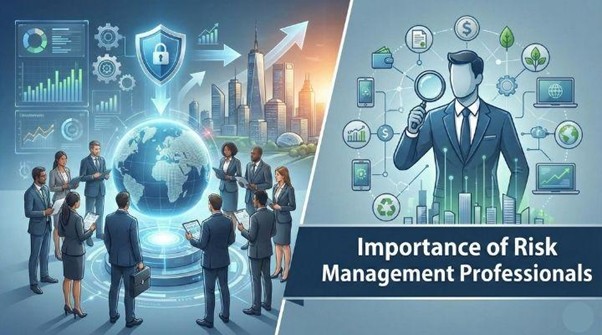
In today’s
hyper-connected and fast-changing global economy, uncertainty has become the
only constant.
From financial
volatility and cyber threats to climate risks and geopolitical instability,
organizations across sectors are navigating an increasingly complex risk
landscape.
In this
environment, risk management professionals are no longer confined to
compliance checklists or crisis response; they are central to strategic
decision-making and long-term sustainability.
As businesses rethink
how they operate, hire, and grow, risk management in the workplace is
emerging as a core capability. The future of risk management will
directly shape how organizations build resilience, protect value, and seize
opportunities.
This growing importance
is also driving strong demand for skilled professionals and advanced academic
pathways such as the M.Sc in Global Risk Management offered by O.P. Jindal
Global University (JGU Online).
Understanding Risk Management in Today’s Workplace
What
Is Risk Management?
Risk management is the
structured process of identifying, assessing, and mitigating potential threats
that could negatively impact an organization’s objectives. These risks can be:
- Financial risks such as
market volatility, credit risk, and liquidity challenges
- Operational risks arising
from internal processes, systems, or human error
- Cyber and technology risks,
including data breaches and system failures
- Regulatory and compliance risks driven
by evolving laws and global standards
- Environmental, social, and
governance (ESG) risks affecting reputation and sustainability
Modern organizations
recognize that unmanaged risks can lead to financial losses, reputational
damage, and long-term instability. As a result, risk management is no longer
reactive-it is proactive, data-driven, and strategic.
Risk Management in the Workplace: A Strategic Imperative
Earlier, risk management
in the workplace was often treated as a support function. Today, it plays a
critical role in shaping corporate strategy. Risk professionals work closely
with leadership teams to anticipate challenges, evaluate scenarios, and guide
informed decision-making.
With the rise of
analytics, artificial intelligence, and predictive modeling, organizations are
embedding risk thinking into daily operations. This shift highlights why
the role of risk management professionals is expanding beyond
compliance to include innovation, governance, and growth planning.
The Expanding Role of Risk Management Professionals
Role of Risk Management Professionals in Organizations
The role of risk
management professionals has evolved significantly over the past decade. They
now contribute to:
- Enterprise-wide risk
identification and assessment
- Designing and implementing risk
mitigation frameworks
- Advising boards and senior leadership
during uncertainty
- Supporting mergers,
investments, and strategic initiatives
By aligning risk
strategies with organizational goals, these professionals help businesses not
only survive disruptions but also thrive amid uncertainty.
Cross-Functional Impact of Risk Management Professionals
Risk management
professionals collaborate across departments, including finance, IT, HR, legal,
and operations. Their insights help organizations balance risk and reward,
especially in areas such as digital transformation, global expansion, and
sustainability initiatives.
This cross-functional
relevance explains why risk management professionals demand continues
to rise across industries and geographies.
Why the Future Workforce Needs Risk Management Professionals
Global Trends Driving Demand for Risk Expertise
Several global trends
are shaping the future of risk management:
- Increasing interconnectedness
of global financial systems
- Rapid technological innovation
and cyber dependency
- Climate change and
sustainability regulations
- Heightened geopolitical and
regulatory uncertainty
These factors have
intensified the demand for risk management professionals, as organizations
seek experts who can anticipate challenges and design resilient strategies.
Risk as a Core Leadership Competency
Risk management is no
longer about avoiding risk altogether. Instead, it focuses on understanding,
pricing, and optimizing risk to support innovation and growth. Future leaders
are expected to be risk-aware decision-makers, making risk management skills a
core leadership competency in the modern workforce.
Risk Management Skills That Define the Future Workforce
Core Risk Management Skills Employers Look For
Employers increasingly
value professionals with strong technical and analytical capabilities,
including:
- Financial risk modeling and
forecasting
- Quantitative and qualitative
risk assessment
- Understanding of global
regulatory frameworks
- Scenario planning and stress
testing
These risk
management skills enable professionals to evaluate uncertainty with
precision and confidence.
Human and Digital Skills in Risk Management Careers
In addition to technical
expertise, successful risk management careers require strong human
and digital skills:
- Clear communication with
stakeholders and leadership
- Ethical judgment and governance
awareness
- Crisis management and
decision-making under pressure
- Proficiency in data analytics,
AI, and digital risk tools
Together, these
competencies prepare professionals to lead in complex, high-stakes
environments.
Growing Demand for Risk Management Professionals Across Industries
Industries Driving Risk Management Jobs
The need for skilled
risk experts spans multiple sectors, including:
- Banking, financial services,
and insurance
- Consulting and professional
services
- Technology and cybersecurity
- Energy, infrastructure, and
sustainability-focused organizations
- Public policy and global
governance institutions
As a result, risk
management jobs are among the fastest-growing roles in the global
employment market.
Risk Management Jobs in India and Global Markets
India is emerging as a
key hub for risk management talent, driven by financial market growth,
regulatory evolution, and global business integration. Organizations are
actively seeking professionals with international exposure and advanced
qualifications, making M.Sc. in Global Risk Management in India increasingly
valuable.
Career Opportunities and Long-Term Growth in Risk Management
Exploring Risk Management Careers
Risk management offers
diverse and future-proof career paths, including roles such as:
- Financial Risk Analyst
- Enterprise Risk Manager
- Compliance and Governance
Specialist
- Global Risk Consultant
These risk
management careers provide strong career stability, global mobility, and
leadership opportunities.
Future-Proofing Careers Through Risk Expertise
Because risk exists across
all industries and economic cycles, professionals with strong risk management
skills enjoy long-term relevance. Their expertise is transferable, allowing
them to move across sectors and geographies as opportunities evolve.
The Role of Advanced Education in Building Risk Leaders
Why Specialised Education Matters in Risk Management
As risk landscapes
become more complex, structured and interdisciplinary education is essential.
Advanced academic programmes equip learners with theoretical knowledge, practical
tools, and global perspectives needed to manage uncertainty effectively.
M.Sc. in Global Risk Management: Preparing Future-Ready
Professionals
An M.Sc. in Global Risk Managementcombines
finance, economics, policy, and governance to prepare professionals for
leadership roles. Such programmes focus on real-world applications, enabling
graduates to address financial instability, regulatory challenges, and global
systemic risks.
JGU Online’s B.Sc. in Risk Management
If you’re looking to
build a career in banking, finance, or risk management, JGU Online’s B.Sc. in
Risk Management offers a smart and future-ready start. Offered by the Jindal
School of Banking & Finance (JSBF), this is India’s first fully online undergraduate
programme focused entirely on Risk Management.
The programme is
designed to give you flexibility without compromising on quality. You’ll learn
through online classes while gaining real-world exposure through a 4-month
Co-op internship-so you graduate with both knowledge and practical experience.
A key advantage of this
programme is its accelerated degree pathway. After completing the 3-year
Bachelor’s programme, you can choose to continue with a 1-year Master’s
programme. This allows you to earn both your Bachelor’s and Master’s degrees in
just four years, helping you save time and gain an advanced qualification early
in your career.
The curriculum is
aligned with global risk management practices and includes opportunities to
earn professional certifications along the way. By the time you graduate,
you’ll be equipped with job-ready skills for careers in banking, finance,
insurance, consulting, and enterprise risk management.
For students who want a
flexible learning experience, strong industry exposure, and faster academic
progression, this programme offers the right balance of learning and career
growth.
The programme prepares
you for high-growth roles across multiple industries, including:
- Banking and Financial Services
- Insurance and Risk Advisory
- Consulting and Corporate Risk
- Enterprise
and Operational Risk Management
This programme is ideal
for students who:
- Want a flexible, online
degree with strong career outcomes
- Are interested in finance,
analytics, and risk-based decision-making
- Wish
to accelerate their education with a Bachelor’s + Master’s
pathway
Why Choose a Master’s in Risk Management in India?
India’s Growing Role in Global Risk Leadership
India’s expanding role
in global markets has increased the need for skilled risk professionals who
understand both local and international contexts. This has driven growing
interest in Masters in Risk Management in India, especially among working
professionals and aspiring leaders.
Benefits of Online Master’s Degrees in Global Risk Management
Online Master’s degrees in Global Risk Management offer
several advantages:
- Flexibility for working
professionals
- Access to global faculty and
industry insights
- Curriculum aligned with
international standards
- Opportunities
for career advancement without geographic constraints
JGU Online’s MSc in Global Risk Management
JGU Online’s MSc in
Global Risk Management is designed to build advanced capabilities in managing
uncertainty and analyzing complex financial systems. The programme focuses on:
- Financial and enterprise risk
frameworks
- Global governance and
regulatory systems
- Strategic decision-making under
uncertainty
It is ideal for
professionals seeking to enter or advance in risk management jobs,
transition into global roles, or strengthen leadership potential. The programme
aligns closely with the growing demand for risk management professionals across
industries.
The Future of Risk Management and Workforce Transformation
Risk management will
increasingly influence how organizations design strategies, evaluate
investments, and build resilient cultures. As uncertainty becomes embedded in
business environments, risk professionals will serve as strategic advisors
rather than back-office specialists.
Organizations that
invest in risk talent today will be better positioned to navigate tomorrow’s
challenges-making the future workforce deeply reliant on skilled risk leaders.
Conclusion: Risk
Management Professionals as Architects of the Future Workforce
In a world defined by
uncertainty, risk management professionals are becoming architects of
sustainable growth and organizational resilience. Their ability to analyze
risk, guide leadership, and support innovation makes them indispensable to the
future workforce.
By developing
advanced risk management skills through specialized education such
as JGU
Online’s MSc in Global Risk Management, professionals can
future-proof their careers and play a vital role in shaping resilient,
responsible organizations.
FAQs:
Risk Management Professionals and Careers
Why are risk management
professionals important for the future workforce?
They help organizations
anticipate uncertainty, manage complex risks, and make informed strategic
decisions.
What skills are required for a career in risk
management?
Analytical ability,
financial expertise, strategic thinking, communication skills, and digital
literacy are essential risk management skills.
Are risk management jobs in demand?
Yes, the global and
Indian markets show strong demand for risk management professionals across
multiple industries.
What industries offer
the best risk management careers?
Finance, consulting,
technology, ESG-focused organizations, and public policy institutions offer
strong opportunities.
What is an MSc in Global
Risk Management?
It is a specialized
postgraduate degree focused on financial systems, global governance, and risk
strategy.
Is a Master’s in Risk
Management in India worth it?
Yes, given India’s
growing role in global markets and the rising demand for risk expertise.
Can working
professionals pursue online master’s degrees in global risk management?
Absolutely. Online programmes offer flexibility, global exposure, and career advancement without disrupting professional commitments.