

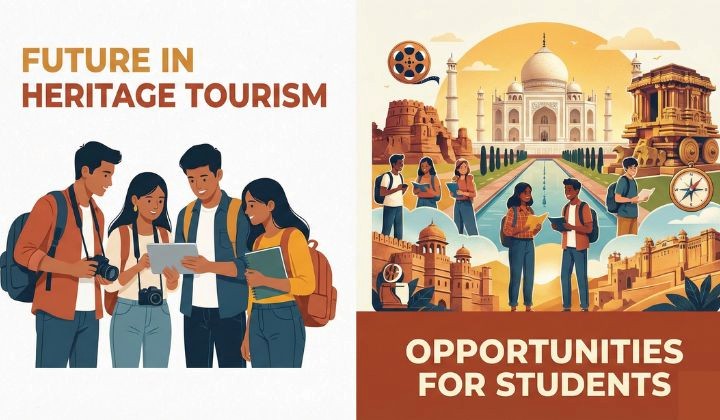
The Rise of Heritage Tourism in India: Opportunities for Students
India is a land
where history is not locked inside textbooks—it lives in ancient temples,
bustling bazaars, historic cities, museums, oral traditions, and everyday
cultural practices.
Over the last decade, there has been a significant shift in how people travel.
Tourists today are no longer satisfied with sightseeing alone; they want
meaningful, immersive experiences.
This change has
fueled the rise of heritage tourism in India,
transforming it into one of the most promising sectors for students seeking
purpose-driven and future-ready careers.
With increasing global interest in heritage and cultural
tourism, India is uniquely positioned as a leading destination.
For students
passionate about culture, history, museums, and sustainable development, this
growing sector offers diverse academic and professional opportunities-especially
when supported by specialized education such as JGU Online’s advanced programs.
Understanding
Heritage Tourism and Cultural Tourism in India
What Is Heritage Tourism?
Heritage tourism in India refers to travel
experiences centered around the country’s tangible and intangible heritage.
This includes:
- Historical monuments, forts, palaces, and
archaeological sites
- Museums, archives, and galleries
- Traditional art forms, crafts, music,
dance, and festivals
- Indigenous knowledge systems and living
cultural practices
Heritage tourism
is not just about visiting places—it is about understanding identity,
continuity, and cultural memory.
What Is
Cultural Tourism in India?
Cultural tourism in India focuses on engaging
with the living culture of communities. While heritage tourism often emphasizes
preservation, cultural tourism highlights participation and interaction.
Examples include:
- Attending local festivals and rituals
- Experiencing regional cuisines and
culinary traditions
- Learning traditional crafts or performance
arts
Together,
heritage and cultural tourism create holistic travel experiences that educate
visitors while supporting local communities.
The Rise of
Heritage Tourism in India: Why It’s Growing
Growing Demand for Authentic Experiences
Modern travelers,
especially younger generations, seek authenticity. They want to understand
local stories, traditions, and histories. This demand has accelerated the rise
of heritage tourism in India, making culture-based
travel a global trend rather than a niche interest.
Government and Institutional Support
Initiatives such
as heritage city development, museum modernization, cultural mapping, and
tourism circuits have strengthened the sector. These efforts have created a
strong ecosystem for heritage tourism education
in India and professional growth.
Digital Media and Global Visibility
Social media,
digital storytelling, and virtual museum tours have amplified India’s cultural
presence globally. This has expanded the reach of heritage tourism while
creating new, tech-driven roles for young professionals.
Economic
and Social Importance of Heritage and Cultural Tourism
Economic Contribution
Heritage and
cultural tourism generate employment across multiple sectors:
- Museums and cultural institutions
- Tourism management and hospitality
- Conservation, research, and documentation
- Creative industries and cultural
entrepreneurship
This makes
heritage tourism one of the most inclusive segments of the tourism industry.
Social and
Cultural Impact
Tourism supports
the preservation of endangered traditions and provides sustainable livelihoods
for artisans and local communities. Importantly, sustainable heritage tourism in India ensures
that growth does not come at the cost of cultural loss.
Tourism
Industry Opportunities for Students
Why the Tourism Sector Is Ideal for Students
The tourism
sector offers interdisciplinary career paths that blend:
- Humanities and social sciences
- Management and policy
- Technology and digital media
For students,
this translates into flexibility, creativity, and long-term relevance.
Tourism
Industry Opportunities for Students
Students can
explore roles such as:
- Heritage interpreters and tour designers
- Museum educators and outreach coordinators
- Cultural project managers
- Research associates and policy assistants
These roles
highlight the wide tourism industry
opportunities for students interested in culture-driven
careers.
How
Heritage Tourism Helps Students
One of the
biggest advantages of heritage tourism is skill development. How heritage tourism helps students includes:
- Strong research and analytical skills
- Storytelling and communication abilities
- Cultural sensitivity and global awareness
- Project management and leadership
experience
Career
Opportunities in Heritage Tourism in India
Popular Heritage Tourism Careers
With professional
training, students can pursue:
- Museum curator or collections manager
- Heritage site manager
- Cultural tourism consultant
- Conservation and documentation specialist
These are some of
the most sought-after heritage tourism
careers today.
Emerging
Career Opportunities
The sector is
evolving rapidly, creating new roles such as:
- Digital archivists and heritage
technologists
- Sustainable tourism planners
- Cultural policy and heritage management
professionals
These emerging
roles reflect expanding career opportunities
in heritage tourism in India.
Opportunities
for Students in Heritage Tourism
Why Students Are in Demand
India needs
trained professionals who understand both heritage and modern management
practices. This creates strong opportunities for
students in heritage tourism, particularly those with
specialized education.
Academic
and Professional Pathways
Students can
engage in:
- Internships at museums and heritage sites
- Research projects and cultural
documentation
- International collaborations and
fellowships
These pathways
help students transition smoothly from education to employment.
Heritage
Tourism Courses for Students
When choosing heritage tourism courses for students, it
is important to look for:
- Interdisciplinary curriculum
- Practical exposure and case studies
- Focus on sustainability and ethics
Heritage
Tourism Education in India
Why Formal Education Matters
Professional
credibility in heritage management requires structured learning. Heritage tourism education in India equips
students with:
- Theoretical foundations of museology and
conservation
- Knowledge of heritage laws and cultural
policy
- Skills for managing museums and cultural
institutions
What
Students Learn
Key learning
areas include:
- Museology and museum studies
- Heritage conservation and curation
- Cultural tourism planning
- Sustainable development practices
Why Choose
an Online Master’s Degree in Heritage Studies?
Online education
has transformed access to specialized fields. For heritage studies, online
programs offer:
- Flexibility for working professionals and
students
- Exposure to global best practices
- Digital tools for research, archiving, and
curation
This makes an
online degree highly relevant for modern learners.
M.A. in
Museology & Cultural Heritage: A Career-Oriented Programme
M.A. in Museology &
Cultural Heritage is designed for students who want to
work at the intersection of culture, history, and management. The program
focuses on:
- Museum operations and exhibition design
- Heritage preservation and documentation
- Cultural research and policy frameworks
Online MA
in Museology and Cultural Heritage
An online MA in Museology and
Cultural Heritage allows learners to:
- Study while gaining professional
experience
- Engage with real-world case studies
- Build networks across cultural and
academic sectors
MA
Museology Online in India
Pursuing MA Museology online in
India opens doors to careers in museums, archives,
tourism organizations, NGOs, and international heritage bodies.
Why Choose MA in Museology & Cultural Heritage from O.P.
Jindal Global University (JGU Online)?
- Globally Aligned
Curriculum:
Explore diverse museum frameworks and heritage management practices through international case studies from the UK, USA, Poland, Sri Lanka, and India, giving you a truly global perspective.
- Experiential,
Hands-On Learning:
Build real-world skills through immersive studio courses and field-based training at JGU’s Constitution Museum and the Rights and Freedoms Academy, bridging theory with practice.
- Future-Ready,
Technology-Driven Approach:
Master advanced tools such as AI, AR/VR, 3D documentation, and digital archiving, preparing you to lead innovation in museums and cultural heritage institutions.
- Interdisciplinary
& Industry-Relevant Expertise:
Learn at the intersection of art, design, history, and technology, guided by globally trained faculty and experienced practitioners actively shaping the heritage sector.
The Future
of Sustainable Heritage Tourism in India
Sustainability is
at the heart of the sector’s future. Sustainable heritage
tourism in India focuses on:
- Protecting cultural assets for future
generations
- Involving local communities in
decision-making
- Promoting ethical and responsible tourism
practices
Students trained
in sustainability will play a crucial role in shaping the future of heritage
tourism.
Conclusion:
Turning Passion into a Purposeful Career
The rise of heritage tourism in India presents
a unique opportunity for students to build meaningful, impactful careers. From
museums and cultural institutions to tourism management and policy-making, the
sector offers diverse and rewarding pathways. With the right academic
foundation-such as an online MA in Museology and
Cultural Heritage-students can transform their passion for
culture into a globally relevant profession.
FAQs:
Heritage Tourism and Student Opportunities
What is heritage tourism in India?
Heritage tourism focuses on exploring and preserving India’s historical,
cultural, and traditional assets.
How is cultural tourism in India different from regular tourism?
Cultural tourism emphasizes immersive experiences, community interaction, and
cultural learning rather than sightseeing alone.
What are the main career opportunities in heritage tourism in
India?
Careers include museum management, heritage conservation, cultural tourism
consulting, and research roles.
How does heritage tourism help students build careers?
It helps students develop research, communication, cultural understanding, and
management skills.
Are there heritage tourism courses for students in India?
Yes, several universities offer undergraduate and postgraduate programmes,
including specialized master’s degrees.
What is an M.A. in Museology & Cultural Heritage?
It is a postgraduate program focused on museums, heritage management,
conservation, and cultural studies.
Is an online MA in Museology and Cultural Heritage valuable?
Yes, it offers flexibility, industry relevance, and global exposure while
maintaining academic rigor.
Who should pursue MA Museology online in India?
Students and professionals passionate about culture, history, museums, tourism,
and sustainable development.